- Email: enquiries@melbhomes.com.au

GET in touch
Schedule a free designer consultation
POPULAR QUESTIONS
Frequently asked questions
Miscellaneous
How do I find out if my builder is registered?
If you are engaging in major domestic building contract, it is mandatory that the principle contractor is a registered building practitioner with the Building and Plumbing Comission. To find out if a builder is registered, visit the BPC website and enter the builders name and/or registration number.
What is the difference between a Custom Builder and Volume Builder?
A Custom Builder is a builder who builds one-of-a kind homes and developments with unlimited design flexibility, fixtures and finishes selections. A Custom Builder will either prepare tailored plans for a unique project or build from plans provided by the owners. Custom Home builders generally take the appropriate time to build homes ethically correct with attention to detail and the right trades for the task.
A Volume Builder builds homes in large volumes. These homes generally don’t allow for design or layout flexibility, cannot be altered or modified and offer a limited amount of fixtures and finishes. Volume home builders often build homes very quick; great for those who are in an extreme hurry but it doesn’t allow for the right attention to detail, workmanship and long-term longevity of the home.
How much does it cost to build a Custom Home or Project?
The cost of building a custom home or any project will always vary from site, size of home, style of home and level of finishes. In general, a cost per square can be used to work with a given budget; however the cost of any custom project we build, is determined with a detailed costing to ensure we are providing you with our best construction price.
With Custom Design & Build projects, we often work backwards from our client’s budget to determine a suitable sized home and level of finishe.
Do you have a set of inclusions and upgrade options?
We do have a list of inclusions and alternative options that we use to base our preliminary proposal on, however, as a custom home builder, the choice of selections and specifications is limitless. If you have a desired style of home you are after, our talented Interior Designers will work with you to source and select fixtures and fittings to suite.
Where do you build?
We build homes throughout Melbourne’s Central, North and North Western suburbs. We work with all site types from flat, sloping, narrow and irregular.
Key suburbs we work in are; Essendon, Moonee Ponds, Niddrie, Pascoe Vale, Oak Park, Glenroy, Roxburgh Park, Craigieburn, Greenvale to name a few.
Will I be keept up to date during construction?
Most certainly yes. Communication is the pinnacle to our success and we enjoy keeping our clients involved and up to date with each stage of the build process.
Do you have any hidden costs?
We are upfront and provide in clear black and white all that we have included in our Contract Price, what has not been included and what additional costs to expect. Often these additional fees are additional Council permits, service authority applications and establishment fees and upgrades to old services.
Can we make variations during construction?
As a Custom Home Builder we consider changes during construction. It is best to come forward as earlier as possible to ensure that the change can be made efficiently with as little additional cost to you as possible.
Can we use our own trades?
The construction industry is one of the most regulated, high risk and challenging industries to operate and work in. As a registered builder, we are personally exposed to an unlimited array of situations that can be detrimental to our business and brand. For this reason, we do not allow owners to supply their own trades or materials while we are in possession of the site. There are some circumstances where exceptions can be made and these are assessed on an individual basis.
Can I view my new home whilst it's being built?
Seeing your new home come together is exciting. Visiting your home during construction can be an enjoyable and rewarding experience. Site visits can be arranged through Melbourne Homes in a way that ensures your safety and the safety of those working on your home.
What is domestic building insurance (DBI)?
DBI provides protection for your project in the event that your builder becomes insolvent, ensuring completion and rectification of any unfinished or defective work. Obtaining this insurance entails a rigorous process wherein builders must demonstrate the profitability and security of their business.
What is dual occupancy?
Dual occupancy, also known as side-by-side duplexes or detached townhomes, involves building two or more individual houses with separate contracts on the same block of land.
Front Facade
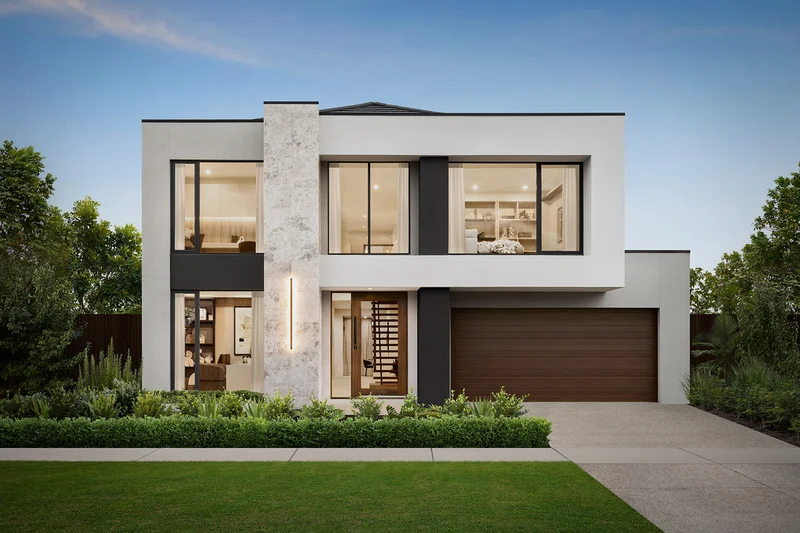
What is a home facade?
A home facade is the front of your house, typically including the door, windows, and any other features. It’s the first thing that visitors will see when they come to your home, so it’s important to choose a design that you love.mes in a way that ensures your safety and the safety of those working on your home.
How can I make my home facade more energy efficient?
One way to make your home facade more energy efficient is to choose windows that have a low U-factor. This measures how well the window prevents heat from escaping, so the lower the U-factor, the better. You can also choose energy-efficient doors and insulation to help keep your home warm in winter and cool in summer.
How do I choose the right facade to add street appeal to my home?
The best way to choose a facade for your home is to think about the overall style you want to achieve. Do you want a traditional look or something more contemporary? Once you’ve decided on the general style, you can start narrowing down your options based on other factors like budget, energy efficiency, and more.
Do I need planning permission for my house facade?
Generally speaking, most facades will not require planning permission as long as they meet the requirements of the Building Code of Australia and council estate covenants.
You may, however, need to adhere to estate covenants or council regulations. When you engage Melbourne Homes for your builder, we’ll help you manage and comply with all planning permit requirements.
What are some common features of a home facade?
Some common features of a home facade include the front door, garage doors, windows and window trims, and other ornamentation, like columns or cornices. You might also have a porch or balcony as part of your facade.
Facades also dictate the appearance of your home’s walls. Choose from red bricks or a sleek black exterior, neutral colours or stone. The possibilities really are endless! Please view our expansive gallery for more of our house designs.
Knockdown Rebuild
Am I eligible for a knockdown rebuild?
Understanding your eligibility involves several key factors, including land suitability, local regulations, and any heritage overlays that may apply to your property. At Melbourne Homes, we’re here to guide you through each step of the process, ensuring that your dream home becomes a reality while adhering to all necessary requirements.
How much to knock down and rebuild in Melbourne?
The cost of a knockdown rebuild in Victoria can vary depending on factors such as the size of the old house, site conditions, and the design of the new house. Typically, KDR costs include site preparation, demolition, construction, and permits. On average, a knockdown rebuild specialist may estimate pricing between $400,000 and $2,000,000 for the entire project. Make sure you ask about any unexpected costs during the consultation stage.
Is it better to knock down, renovate or buy an established home?
While renovating can be a good option for minor changes, a knockdown rebuild is the best of both worlds. It’s better to rebuild if you seek major upgrades to the flow, structure and layout of the home. Allowing you to enjoy a streamlined build process, with experts guiding you a long the way, expertly curated floorplans, showstopping facades and an energy-efficient home saving you time and money. Building a new house can increase land value, provide modern energy efficiencies, and give you a fresh start without the limitations of your existing structure. Plus, a knockdown rebuild service offers the ability to design your home from scratch, ensuring it suits your current lifestyle perfectly.
Do you pay stamp duty on a knock down rebuild?
You generally won’t pay stamp duty costs on the construction of a new house when rebuilding. However, if you purchase a new block of land to knock down and rebuild, stamp duty costs would apply to the land purchase. It’s important to verify this with a legal expert and local councils to understand the specifics of your project. Check out our blog about avoiding knockdown rebuild mistakes to learn more.
How long does a knock down rebuild take?
If you choose to knockdown and rebuild your home, the entire process of knocking down your old house and replacing it typically takes 12 to 18 months, depending on factors such as council approvals, demolition timelines, and the construction phase. Demolition can take a few weeks while building the new house on your ground floor can take several months.
Is it worth knocking down your house?
Yes, a knockdown rebuild can be worth the investment if your old house no longer meets your needs or is beyond repair. A spacious home built from scratch provides modern features, increased comfort, and enhanced land value. Partnering with a knockdown rebuild specialist ensures the project is handled professionally, from obtaining the demolition permit to working with a demolition company and completing the display home-ready build. As knockdown rebuild experts, Melbourne Homes is here to help you build a home you’ll love in the location you love with the finishes and features that enhance your lifestyle. Start your build journey with Melbourne Homes today.
Property Investment
Why invest in property?
When you’re building long-term wealth, investing in property has proved to be a low risk and stable investment strategy. History has shown that overall property values rarely go down. In comparison, investing in the stock market is a much higher risk investment. If you take the time to select your investment property well, you’ll not only benefit from a good return on your investment, but also receive steady cash flow from rental payments. You can also invest your super via a Self Managed Super Fund (SMSF), read more about investing in property with a SMSF here.
How different will an investment loan be to my existing loan?
If you’re borrowing for an investment property – rather than a home you’re going to live in – some lenders may charge a higher interest rate because they see the risk being greater. But not always! That’s why it pays to explore all of your options and research loan providers. Talk to one of investment property loan specialists today.
Can I invest in property in Australia if I live overseas?
If you are an Australian citizen or Permanent Resident buying property is pretty straightforward as long as you have the financial means to do so. However, if you’re neither of these the process can be a bit more complicated. Please read the FAQs on the Australian Government Foreign Investment Review Board website.
Can I use equity in my existing home to buy property?
Yes. If you’re already a home owner you may not need a deposit to fund the purchase of your investment property. Instead you may be able to use the power of your existing home’s equity.
If you have owned your home for a few years there’s a good chance you have built up some decent equity (the difference between your home’s market value and the balance of your mortgage). Want to know more about how to use the equity in your current home to buy your investment property? Get in touch with our property investment specialists today.
What's negative gearing and how does it work?
When it comes to property investment, gearing just means that you’re borrowing money to invest in property. That’s what it means to get a loan to invest in property. The reason why investors do this is that gearing allows you to invest in an asset of far greater value than you could afford otherwise.
Negative gearing is when the cost of owning and maintaining a property (including interest on the loan – but not repayments on the principal loan amount) outweighs the rental income of the property. The reason why this is called negative is that the difference is a loss that can be claimed as a tax deduction, reducing tax payable on other types of income including your wage or salary.
What’s positive gearing and how does it work?
Positive gearing occurs when the income from your investment property exceeds your interest expense and other deductions. In this case, you may be subject to additional tax on income derived from your investment property.
What is co-ownership and joint ownership?
Co-ownership and joint ownership means that you can pool your financial resources with friends and/or family to help you invest in property. However, this strategy carries more risk because one of your co-investors may become bankrupt or suffer other financial hardship. If you choose this strategy please ensure you access to the right legal advice to create a contract that outlines each applicant’s commitment and percentage of ownership after paying off the mortgage.